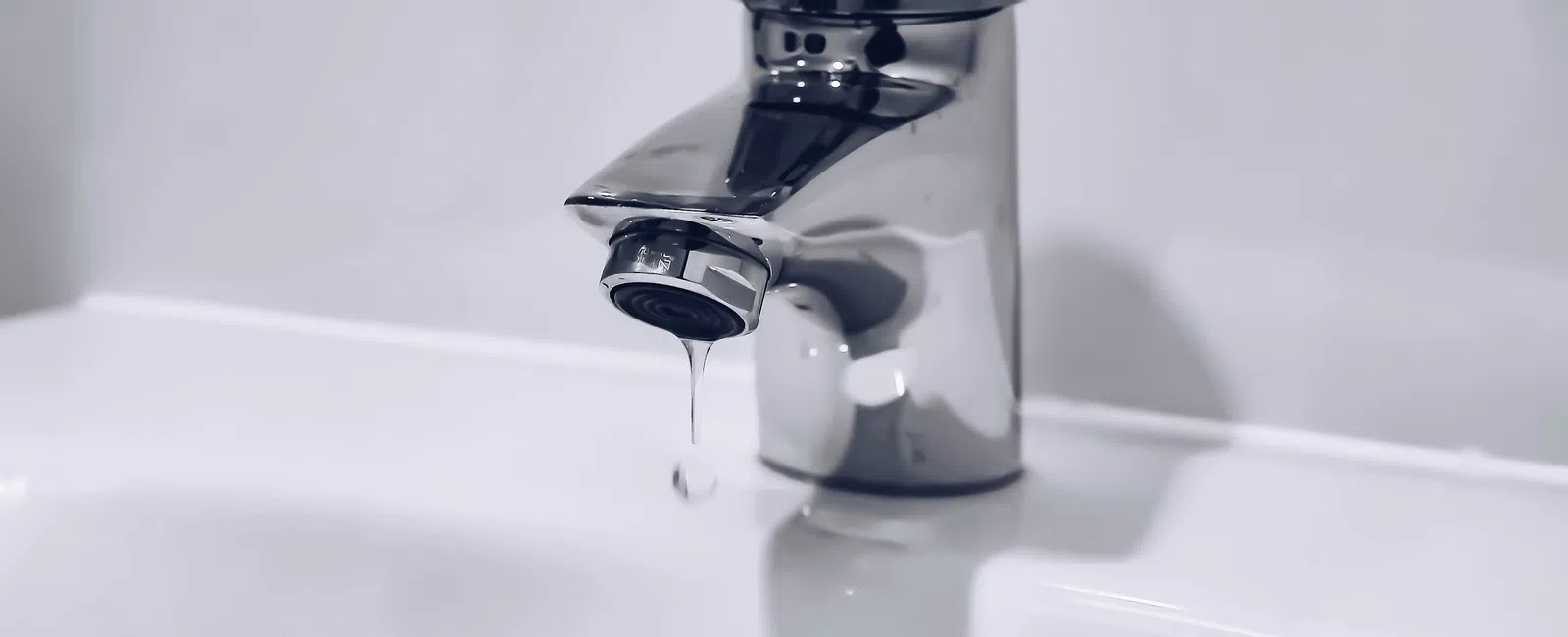
That slow drip from your kitchen or bathroom faucet is not only annoying, but a faucet that drips once per second wastes over 3,000 gallons of water a year. This is enough to show up on your Atlanta water bill and enough to stain a sink or corrode a fixture over time. The good news is that most leaky faucets are a simple fix, and you can often handle it yourself in under an hour with basic tools. Here is how to figure out why your faucet is leaking, how to fix it step by step, and when it is smarter to call a plumber.
Why Your Faucet Is Leaking
Almost every faucet leak traces back to a worn-out part inside the fixture. The most common cause by far is a worn washer or O-ring. These small rubber seals break down with everyday use, and once they harden or crack, water sneaks past them and drips from the spout or pools around the handle. A close second is a corroded valve seat, which is the connection between the faucet and the spout. Metro Atlanta's hard water leaves mineral deposits that build up and eat away at this connection, causing leaks around the base of the spout.
If your faucet uses a cartridge instead of washers, a worn cartridge is often the reason it keeps dripping even when the handle is fully off. Worn inlet and outlet seals collect sediment and fail in a similar way, especially in Georgia homes dealing with hard water. Finally, water pressure that runs too high can force water past otherwise healthy seals. If your faucet only drips at certain times of day or when other fixtures are running, pressure is worth checking.
First, Identify Your Faucet Type
The right fix depends on what kind of faucet you have, so this step saves you time. A compression faucet has two separate handles that you tighten to shut off, uses rubber washers, and is the type most likely to develop a drip. A cartridge faucet has a smooth, non-tightening handle motion and is repaired by swapping the cartridge. A ball faucet has a single handle that moves in all directions, is common on kitchen sinks, and uses a ball mechanism with springs and seals. A ceramic disc faucet has a single lever over a wide cylindrical body and is durable, though its seals and disc can still fail. If you are not sure which one you have, check under the sink or look up your faucet's brand and model, since most manufacturers sell a matching repair kit.
How to Fix a Leaky Faucet, Step by Step
Before you start, gather an adjustable wrench, a flathead and Phillips screwdriver, replacement washers or O-rings or a cartridge kit, plumber's grease, white vinegar, and a rag.
- Shut off the water. Turn the shutoff valves under the sink clockwise until they stop. If there are no valves under the sink, shut off your home's main water supply. Then open the faucet to release any remaining water and pressure.
- Plug the drain. Drop in a stopper or lay a rag over the drain so small screws and parts cannot disappear down it.
- Remove the handle. Pry off the decorative cap on top of the handle, remove the screw underneath, and lift the handle off. If it is stuck from mineral buildup, a little penetrating oil helps.
- Inspect and replace the worn part. Pull out the washer, O-ring, or cartridge. If it is brittle, cracked, or flattened, that is your leak. Take the old part to the hardware store to match it exactly, then drop in the replacement. Coat new washers and O-rings with plumber's grease so they seal well and last longer.
- Clean away mineral buildup. While the faucet is apart, soak the metal parts and the valve seat in white vinegar for 10 to 15 minutes to dissolve the hard-water scale that Atlanta plumbing is prone to. Wipe everything clean before reassembling.
- Reassemble and test. Put the faucet back together in reverse order, hand-tightening so you do not crack anything. Turn the water back on slowly and run the faucet, watching for drips at the spout, the base, and the handle.
When to Call a Professional
DIY works for most simple drips, but some situations call for a licensed plumber. If the leak keeps coming back after you have replaced the washer or cartridge, or if water is leaking from under the sink or inside the wall rather than the faucet itself, it is time to bring in a pro. The same goes for a corroded valve seat or faucet body that needs full replacement, shutoff valves that are stuck or broken, or warning signs of a bigger problem such as low pressure, discolored water, or several fixtures dripping at once. Forcing a stubborn part or overtightening a fitting can turn a small drip into a much larger repair, so there is no shame in handing it off.
Preventing Future Faucet Leaks
A few simple habits go a long way in Metro Atlanta's hard-water conditions. Turn your faucet off gently rather than cranking the handle, since overtightening wears out washers faster. Consider a water softener or periodic vinegar cleaning to slow the mineral buildup that corrodes seals and valve seats. Keep an eye on your water pressure and aim to keep it in the normal 40 to 60 psi range, because consistently high pressure shortens the life of every fixture in your home. Most importantly, fix small drips early, before they damage the sink, cabinet, or fixture.
Get It Fixed Right the First Time
A leaky faucet is one of the most common plumbing problems in Atlanta homes, and one of the easiest to fix once you know what is causing it. If you would rather skip the trial and error, or the leak turns out to be more than a worn washer, RooterPLUS! is here to help. Our licensed Atlanta plumbers can repair or replace any faucet fast and check for the hidden issues a drip sometimes signals. Call RooterPLUS! or schedule service online today and put an end to that drip for good.