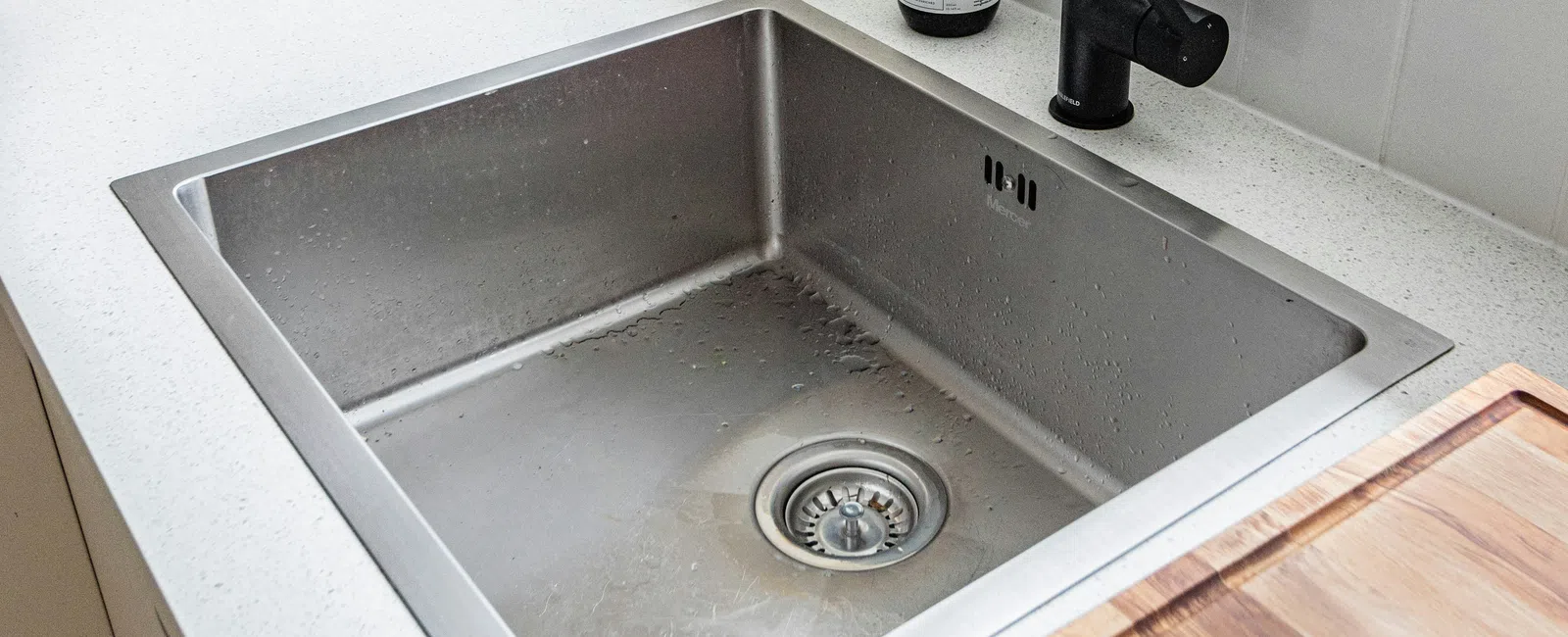
A garbage disposal leaking from the bottom usually means an internal seal inside the unit has worn out, and in most cases the fix is replacing the disposal rather than repairing it. Before you buy a new one, confirm where the water is really coming from, because leaks at the sink flange, dishwasher hose, or drain pipe often run down the outside of the unit and drip off the bottom. Those leaks are cheaper to fix, and catching any of them early keeps water from soaking the cabinet floor and growing mold.
Why a Garbage Disposal Drips Out of the Bottom
A disposal is a motor sealed below a grinding chamber. Water and food pass through the chamber every time you run it, and a set of internal seals keeps that water out of the motor housing. Over years of use, those seals wear down. Corrosion from food acids and constant moisture can also eat through the housing itself. Once either happens, water gets past the seal and drips out of the bottom of the unit, often around the reset button or the screws on the base.
Age is the biggest factor. Most disposals last somewhere around 8 to 15 years, depending on how hard they work and how they are treated. A disposal that runs after every meal in a busy kitchen wears out sooner than one in a home where it gets used a few times a week. If yours is near or past that range and water is coming from the base, the unit is telling you it is done.
Plenty of disposals that look like they are leaking from the bottom are not. Water from a loose connection higher up follows the outside of the unit down and drips from the lowest point, making it look like a bottom disposal leak. That is why it is crucial to find the true source before you decide anything.
How to Find Where Your Disposal Leak Starts
You can track down most disposal leaks in about ten minutes with a flashlight and some paper towels. Cut the power first, either by unplugging the unit under the sink or switching off its breaker, so nobody can turn it on while your hands are nearby.
- Clear out the cabinet and dry the disposal, the sink flange, and every pipe and hose connected to it.
- Put the stopper in the sink, fill it with a few inches of water, and add a few drops of food coloring so leaking water is easy to spot.
- Watch the top of the disposal where it meets the sink, then pull the stopper and let the water drain while you check the dishwasher hose, the drain pipe on the side, and the bottom of the unit.
Run your hand or a dry paper towel along each connection as the water drains. The first wet spot you find is usually the source. If everything stays dry until the water reaches the bottom of the unit, the leak is internal.
Common Garbage Disposal Leak Points and What Fixes Them
Each leak location points to a different repair. Some take a few minutes with a wrench, while others mean the disposal needs replacing.
Sink Flange Leaks at the Top
The sink flange is the metal ring inside the drain opening. It sits on a bead of plumber's putty and is held tight by a mounting assembly underneath. When the putty dries out or the mounting bolts loosen from vibration, water seeps between the flange and the sink and runs down the side of the disposal. Tightening the mounting assembly sometimes stops it. If the putty has failed, the disposal has to come down so the flange can be reset with fresh putty.
Dishwasher Hose Connection Leaks
Most disposals have a port on the side where the dishwasher drain hose connects with a clamp. A loose clamp or a cracked hose leaks only when the dishwasher drains, which is why this one confuses people. If your cabinet is wet after running the dishwasher but dry after using the sink, start here. Tightening the clamp or replacing the hose usually solves it.
Drain Pipe Leaks on the Side
The discharge tube connects the side of the disposal to the sink drain pipes. It seals with a rubber gasket and a couple of bolts. A worn gasket or loose bolts let water out every time the disposal sends water down the drain. Replacing the gasket is an inexpensive part and a quick repair. Check the rest of the drain pipes and the trap while you are there, since slip nuts on those fittings loosen over time too.
A True Leak From the Bottom of the Unit
When the water is coming from the reset button, the base screws, or a crack in the housing, the internal seals or the body of the disposal have failed. A rusty, crusty bottom is another sign of a leak that has been going on for a while. These parts are not designed to be serviced by homeowners, and manufacturers generally do not sell replacement internal seals. This is the point where replacing the disposal makes more sense than repair.
Can You Repair a Garbage Disposal Leaking From the Bottom?
For a true bottom leak, most often you cannot. Taking a disposal apart to reseal it costs more time than the unit is worth, and the result rarely holds. Products like sealant or epoxy smeared on the outside might slow the drip for a while, but the seal inside keeps failing and water keeps reaching the motor, which creates its own problems.
Replacement is also a chance to fix whatever made the old unit wear out early. If you run the disposal constantly, a model with more horsepower handles heavy use better. If your home is on a septic system, our technicians can recommend a disposal that suits it. And if the flange or drain connections were part of the problem, those get resealed during the installation.
Leaks at the flange, dishwasher hose, or drain pipe are different. They are true repairs, and the disposal itself can keep working for years.
What to Do Now
A slow drip does not seem urgent, but water under a sink sits in the dark, soaks into the cabinet floor, and can damage the subfloor below. Until the leak is fixed:
- Stop using the disposal and the dishwasher, and leave the power off at the plug or breaker.
- Put a shallow pan or bucket under the unit and empty it often.
- Dry the cabinet completely and check for soft, swollen, or stained wood.
If the cabinet floor is warped or you notice a musty smell, water has likely been leaking longer than you thought. Our mold removal team can check for hidden growth, and our leak repair service handles damaged supply lines and drain pipes under the sink.
How RooterPLUS! Can Help
If the leak source is still unclear, or the disposal needs replacing, our garbage disposal repair technicians find the source and give you a clear answer for repair or replacement. They are licensed, work on all major disposal brands, and drive trucks stocked for most same-day fixes. You get a written estimate before any work begins. Our services also cover problems with the sink, faucet, or drain connections around the disposal.
Schedule service online or call (770) 888-1931.