A floor drain sits at the lowest point of your home's plumbing, which is exactly why it backs up first when something goes wrong deeper in the system. Water and waste follow gravity, and when the main sewer line clogs, everything upstream looks for the nearest low opening to escape. That opening is almost always the floor drain in the basement, the garage, the laundry room, or the crawl space. So a floor drain backing up is rarely a problem with the floor drain itself, it is usually the first visible sign of a blockage somewhere in the main line.
A single slow sink is a local clog. A floor drain pushing water back up, especially when you run another fixture, signals that the main line is in trouble.
Basement, Slab, and Crawl Space Floor Drains
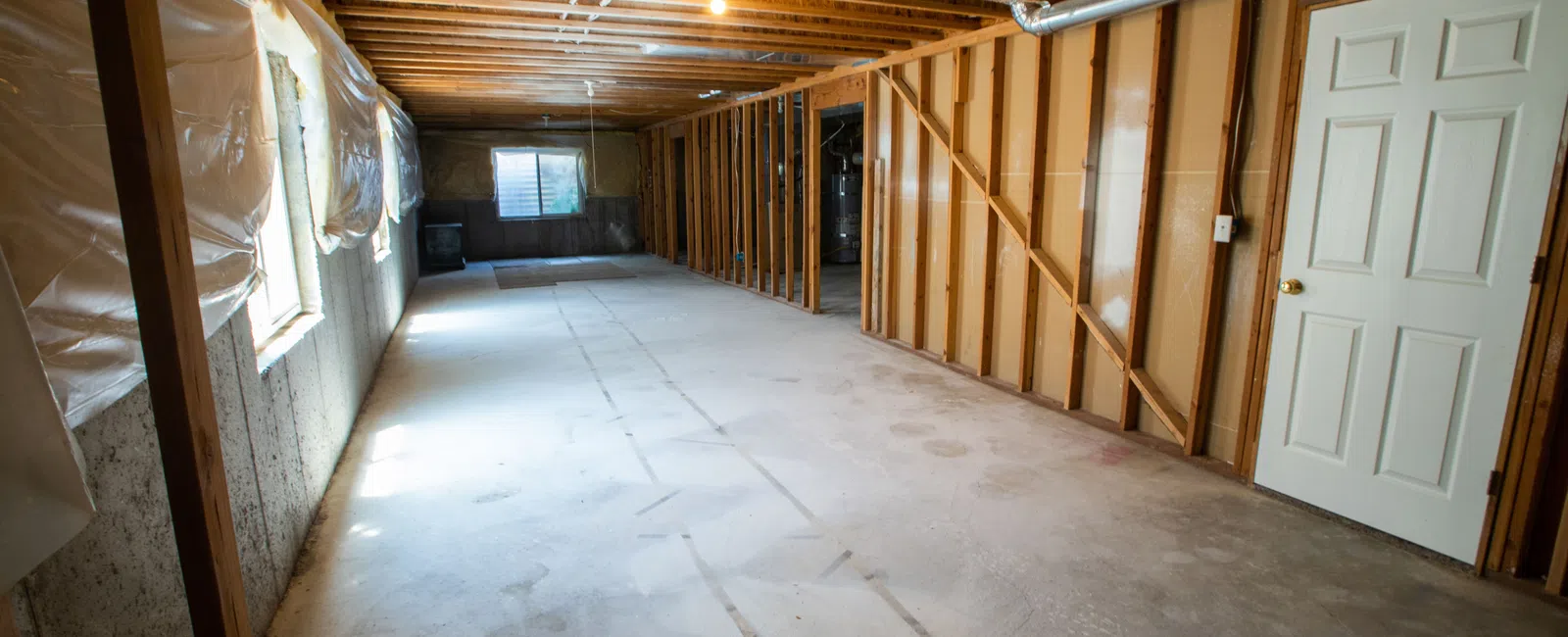
Most homes here drain through a floor drain in a slab, a garage, a utility area, or a crawl space instead. The location changes where you see the water, but the underlying problem is the same: the drain is the low point, and it backs up when the line below it cannot carry the flow.
This matters because a backup in a slab or crawl space is easy to miss until it has been going on a while. They are easy to see in a basement, but a crawl space floor drain can back up quietly and sit there, which is how a small clog turns into standing water under the house and a much bigger repair.
The Test That Tells You Where the Clog Is
There is a simple way to figure out whether you are dealing with a local clog or a main line blockage, and it costs nothing.
Run water at a fixture on the lowest floor, or flush a toilet, and watch the floor drain. If flushing the toilet or running the washing machine makes the floor drain gurgle or back up, the clog is in the main line, because those fixtures share the same path out to the sewer and the water is backing up at the lowest point. If the floor drain is the only thing affected and everything else drains fine, the clog is local to that drain's own trap and branch.
That distinction decides everything about the fix. A local clog is a quick cabling job on one line. A main line blockage means the whole house is draining through a pipe that is closing off, and that needs to be cleared at the main before it turns into sewage coming up through the floor.
What Usually Causes
Three causes account for most main line backups in this area.
The first is grease and buildup collecting in the line over years until the opening is too narrow to keep up.
The second is tree roots, which are a genuine problem in older intown neighborhoods where mature trees sit near clay and cast iron sewer lines and their roots work into the joints looking for water.
The third is our red clay soil itself, which shifts with the seasons and stresses older pipe until it cracks, bellies, or separates at a joint. Our Georgia clay soil article gets into why lines here fail differently than they do elsewhere.
Rain is the other tell. A floor drain that backs up during or right after a storm points toward groundwater getting into the line or roots that swell the blockage when the soil is saturated.
Reading the Symptoms
The way the backup behaves usually points straight at where the clog sits:
| What you notice | Where the clog sits | What it takes to fix |
|---|---|---|
| Only the floor drain backs up | A clog in the floor drain trap or its branch line | Cabling the local line |
| Floor drain backs up when you run the washing machine or flush a toilet | The main sewer line is blocked, and the floor drain is the lowest escape point | Camera the main, then cable or jet it |
| Sewage smell and dark water surfacing | A sewer backup pushing waste up through the drain | Clear the main and clean up safely |
| Backs up during or right after heavy rain | Groundwater or root intrusion overwhelming the line | Camera inspection to locate the entry point |
Why This Is Not a Drano Job
Store-bought chemical drain cleaner is close to useless on a main line backup, and it can make the cleanup worse. The product sits in standing water, never reaches the actual blockage deep in the line, and leaves caustic liquid for whoever has to clear the drain afterward. A main line clog gets cleared mechanically, either by cabling the line or, for heavy grease and roots, hydrojetting that scours the pipe back to full diameter. When the cause is not obvious, a camera inspection finds the exact spot and reason, so the line gets fixed instead of just temporarily punched through.
If sewage is already surfacing, keep people and pets away from it and stop running water in the house, since every fixture you use adds to what is coming up through the floor. That is an emergency call, and it needs professional drain service, not anything you want to handle yourself.
Floor Drain Backing Up? Get the Main Line Checked.
RooterPLUS! has cleared main line backups across metro Atlanta since 1994, in more than 100,000 homes. We will camera the line, find the real blockage, and give you a written estimate before any work starts. No guessing and no phone quotes.
Live dispatch answers 24/7 with no upcharge for nights, weekends, or holidays. GA Plumbing License #MP207808.
Call 770-888-1931 or schedule service online.