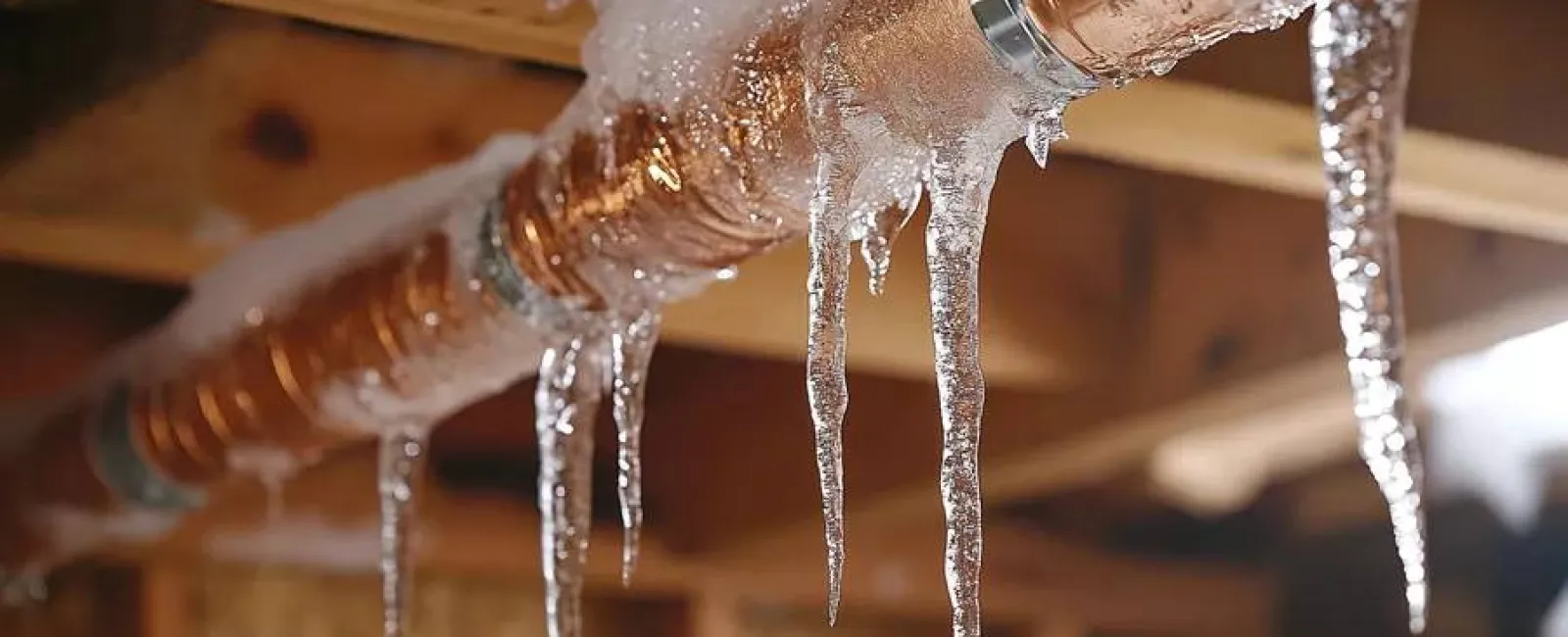
Frozen pipes will eventually thaw on their own as outdoor temperatures rise above freezing, but waiting for natural thawing significantly increases your risk of pipe bursting and catastrophic water damage to your home. While pipes can theoretically self-thaw, this passive approach typically takes hours, days, or even weeks, depending on weather conditions and pipe location, during which expanding ice continues to build pressure inside your plumbing system. The real danger isn't the ice itself—it's the pressure buildup that causes pipes to crack and burst, potentially resulting in thousands of dollars in water damage before you even realize a problem exists.
Understanding how frozen pipes behave and when professional intervention becomes necessary is essential for protecting your home during the winter months. A proactive approach to thawing prevents burst pipes, which catch many homeowners off guard and unprepared.
Why Frozen Pipes Form: Understanding Winter Plumbing Physics
Pipes freeze when water inside them is exposed to temperatures at or below 32 degrees Fahrenheit. However, pipes don't typically freeze solid instantly—the freezing process occurs gradually as ice forms along the pipe walls, progressively narrowing the interior passage. Most residential pipes begin to freeze when temperatures drop below 20 degrees Fahrenheit, especially if they are located in uninsulated areas, near exterior walls, or in crawl spaces and attics.
The formation of frozen pipes most commonly occurs in vulnerable locations with minimal heat or insulation. These problem areas include water lines running through unheated garages, outdoor faucets that haven't been properly winterized, pipes in basement crawl spaces, attics, or areas of your home that remain unheated during winter. Even pipes running through interior walls can freeze if your home's heating system fails or if you've drastically lowered your thermostat temperature during a cold snap.
When ice forms inside a pipe, it expands with tremendous force. Water is one of the few substances that increases in volume as it freezes, creating internal pressure that continues mounting as more ice accumulates. This expanding ice doesn't just clog your water line—it actively stresses the pipe's structural integrity, weakening walls and creating microscopic fractures that may not burst immediately but often fail once thawing begins.
The Timeline: How Long Frozen Pipes Actually Take to Thaw Naturally
If you're relying on your frozen pipes to thaw on their own, prepare for an extended wait. Natural thawing timelines vary dramatically based on pipe location, the extent of pipe freeze, and outdoor temperature patterns. In many cases, natural thawing takes several hours to several days. During particularly severe cold snaps or extended periods of below-freezing weather, some frozen pipes take two weeks or longer to thaw thoroughly.
Several factors influence how quickly natural thawing occurs. Pipes located near heat sources or within interior walls thaw faster than those in uninsulated exterior areas. Pipes that are only partially frozen begin showing water flow much sooner than completely blocked sections. Most importantly, outdoor temperature matters significantly—your frozen pipes won't thaw noticeably unless the air temperature rises above freezing for at least several hours, and even then, the heat must be sustained long enough for it to penetrate the pipe itself.
This extended waiting period creates a dangerous scenario in which your pipes remain frozen for an extended period, during which pressure from expanding ice continues to build. The longer ice remains in your pipes, the greater the chance of structural failure. Many homeowners who wait for natural thawing discover burst pipes the moment temperatures rise and full water pressure returns to ice-weakened pipes.
The Real Risk: Why Waiting for Natural Thawing Is Dangerous
Letting frozen pipes thaw on their own might seem like the safest, most hands-off approach, but this strategy actually carries substantial risk of causing more damage than the freeze itself. The primary danger involves pressure buildup and pipe bursting.
As frozen pipes gradually warm, the ice begins to melt from the warmest sections first, usually near heat sources or at faucet openings. However, a downstream ice blockage prevents normal water flow, trapping pressure that builds rapidly as melting accelerates. When the main section of ice finally gives way and pressure releases, water rushes through at full force, often tearing through weakened pipe walls that have been stressed by expanding ice. A burst pipe can release hundreds of gallons of water into your home within hours, causing significant damage to walls, floors, insulation, and personal belongings.
Additionally, repeated freeze-thaw cycles create further risk. Suppose outdoor temperatures fluctuate above and below freezing during winter, which occurs frequently in many climate zones—pipes that partially thaw may refreeze, leading to additional ice buildup and pressure cycles. Each cycle weakens the pipe further, increasing the likelihood of a burst in pipes that survived earlier freezing.
The aftermath of burst pipes extends beyond immediate water damage. Water seeping into wall cavities, under floors, or into insulation creates ideal conditions for mold growth, which develops within 24-48 hours of water exposure. Mold remediation can cost as much as, or more than, the initial pipe repair, and it poses serious health risks to household members. Even if pipes don't burst, water from a failed pipe can soak into insulation and drywall, reducing the insulation's effectiveness and driving up your energy bills for months or years until the damage is addressed correctly.
Signs Your Pipes Are Frozen: Early Detection Prevents Disaster
The most apparent sign of frozen pipes is a complete loss of water flow or a dramatic drop in water pressure at one or more fixtures. If turning on your bathroom faucet produces only a trickle while your kitchen sink still flows normally, you likely have a localized frozen section. If all fixtures simultaneously show no water flow, the main water line entering your home may be frozen, which requires immediate attention.
Before assuming your pipes are frozen, rule out other possibilities. Check with your neighbors to see if they've also lost water—if they have, your water provider may have cut service to the area. If only specific fixtures are affected, trace the plumbing line backward to identify where the blockage might be. Frozen sections are most commonly found in exposed pipes, pipes near exterior walls, or lines running through unheated spaces.
Look for visible frost or ice on exposed pipes, though frozen sections are often hidden inside walls. If you suspect a frozen pipe in a specific location, listen carefully—sometimes you'll hear banging or clanging as pressure builds inside the pipes, a warning sign that ice is forming and pressure is increasing.
Taking Action: How to Safely Thaw Frozen Pipes Yourself
If you discover frozen pipes, immediate action significantly improves your outcome. Start by turning on the faucet supplied by the frozen pipe to the lowest possible flow—a small trickle works best. This relieves pressure within the system and allows water to escape immediately once thawing begins, preventing pressure buildup that could cause bursting.
For accessible frozen pipes, applying gentle, consistent heat is far more effective than waiting for natural thawing. A handheld hair dryer works well for most residential pipes—use it by slowly moving it back and forth along the frozen section, starting closest to the faucet opening. This directional approach prevents steam pressure buildup inside the pipe. Heat tape (also called heat cable), available at hardware stores, wraps around the pipe and provides steady heat with a lower risk of overheating. Space heaters positioned near frozen pipes circulate warm air effectively, but maintain at least 3 feet of clearance from walls and flammable materials.
Never use open flames, blowtorches, or propane heaters on frozen pipes. These heat sources generate dangerously high temperatures that can rupture or permanently weaken pipes. Open flames also pose a serious fire risk in confined spaces such as attics and crawl spaces.
For pipes hidden inside walls or ceiling cavities, applying heat to the exterior surfaces helps, but it works slowly. If this approach doesn't produce flowing water within 30 minutes, stop attempting DIY thawing and call a professional plumber. Professionals use infrared heating equipment and specialized tools to locate hidden frozen sections and thaw them safely without damaging your home's structure.
When Professional Help Becomes Essential
Certain frozen pipe situations absolutely require professional plumbing intervention. If no water flows at any fixture in your home, your main water line is likely frozen—this typically occurs only during extreme cold (below 10 degrees Fahrenheit) and requires professional equipment to diagnose and repair. If you cannot locate the frozen section despite checking obvious problem areas, or if DIY thawing hasn't restored water flow within 30 minutes, call an emergency plumber immediately.
Professional plumbers have thermal imaging cameras that detect frozen sections through walls without requiring invasive hole-cutting. They employ specialized thawing equipment, including electric heating systems and steam generators, that safely warm pipes without damaging surrounding structures. Most importantly, they can assess whether pipes have already cracked or burst, preventing you from discovering damage only after significant water has entered your home.
Protecting Your Pipes: Prevention Strategies That Work
The best response to frozen pipes is prevention. Maintain your home's thermostat at a minimum of 55°F during winter, even when you're away. Open cabinet doors beneath sinks to allow warm air to circulate through the pipes in these vulnerable areas. During extreme cold snaps, let faucets drip slightly—the movement of water, even a tiny flow, prevents ice formation more effectively than fully closing the valves.
Insulate exposed pipes in unheated areas with foam pipe insulation sleeves, available at hardware stores for an affordable price. Disconnect outdoor hoses before freezing weather arrives and cover exterior spigots with protective caps. If you have a vacation home or rental property that sits empty during winter, drain the entire system and winterize pipes to prevent freezing when no heat is running.
What Happens When Frozen Pipes Finally Thaw
As ice in your pipes melts, you may hear gurgling, clanking, or banging as water begins to flow through sections that were previously blocked. This is normal. Continue running the faucet at low flow to maintain pressure relief while thawing progresses. Never suddenly increase water pressure to full force—do so gradually as the pipe fully thaws to avoid shocking weakened sections.
If your pipes burst during or immediately after thawing, turn off your main water valve immediately—you'll typically find it at your water meter, near the street, or at your home's foundation. Then contact an emergency plumber. Even a small burst pipe can release hundreds of gallons before you notice the problem.
The Bottom Line: Action Beats Waiting
Frozen pipes will technically thaw on their own eventually, but relying on this passive approach puts your home at significant risk. The few hours you invest in applying safe heat to frozen pipes today will prevent thousands of dollars in water-damage repairs, mold remediation, and property restoration you'll face if the pipes burst. Taking immediate action—whether through DIY methods or professional help—remains your safest, most cost-effective strategy for managing frozen pipes during winter months.
When winter temperatures drop, and your water stops flowing, don't wait for spring warmth to resolve the issue. Contact a professional plumber who can safely thaw your pipes and assess whether any damage has occurred. Quick intervention protects your home, your family, and your wallet.